
Every drop of water in Cardinia is part of a bigger story.
Created in collaboration with Kate Gorringe-Smith, with contributions from Council’s environment and conservation teams, local schools and community participants
Commissioned by Cardinia Shire Council for Cardinia Cultural Centre, with support from Melbourne Water, Western Port Biosphere Reserve Foundation and Bunurong Land Council Aboriginal Corporation.
23 July to 31 August 2026
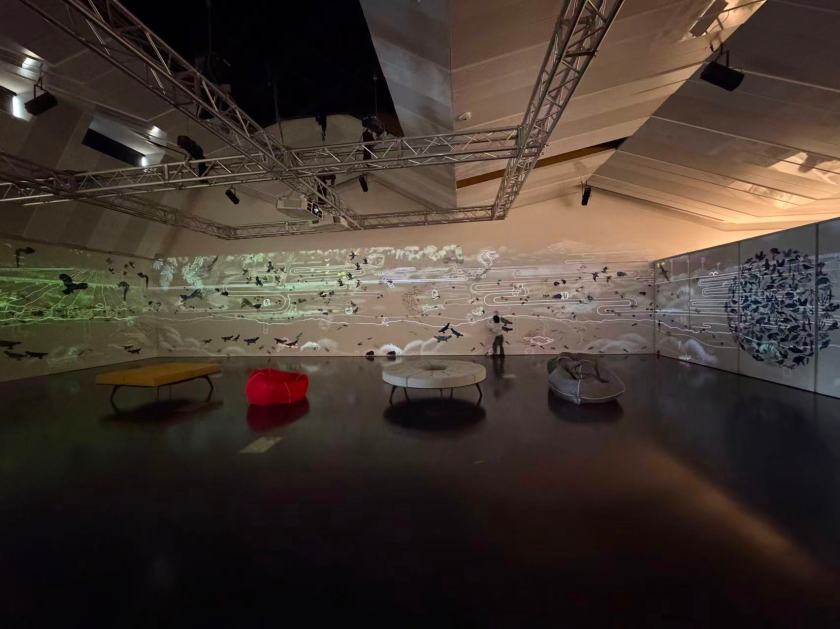
Catchment to Coast is a collaborative community exhibition exploring the waterways, biodiversity and changing landscapes of Cardinia Shire. Developed with Cardinia Cultural Centre, Council’s environment and conservation teams, artist Kate Gorringe-Smith, community participants, and local schools, the exhibition follows water from the Shire’s forested hills through wetlands, agricultural and urban environments, and towards Western Port Bay.
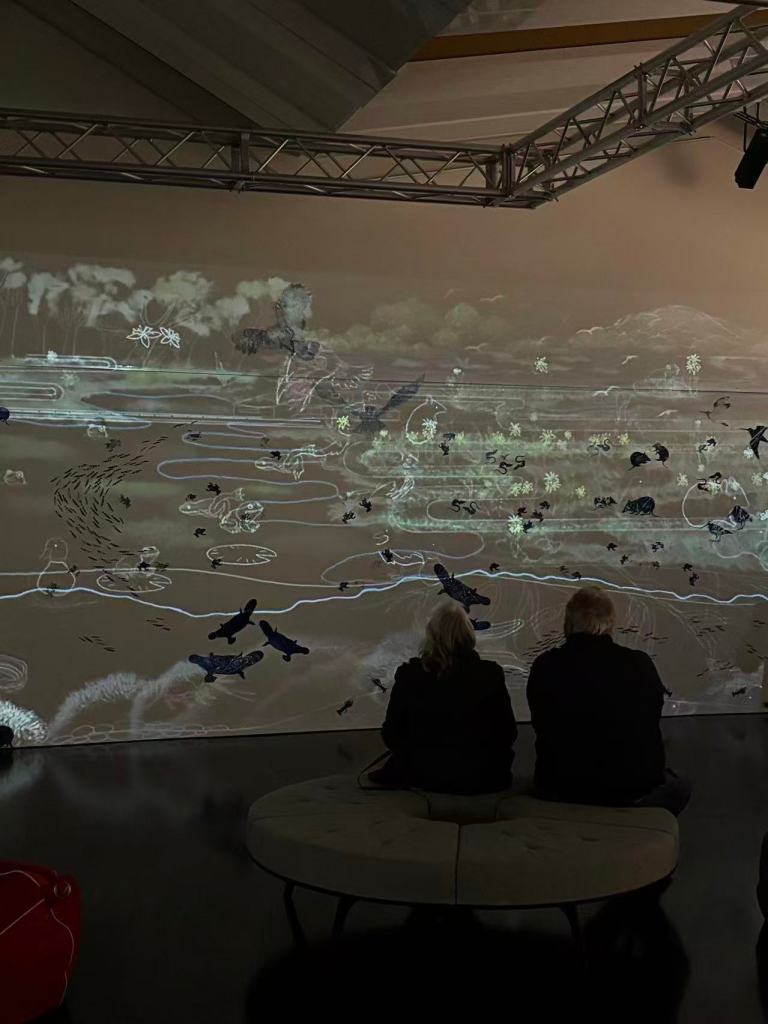
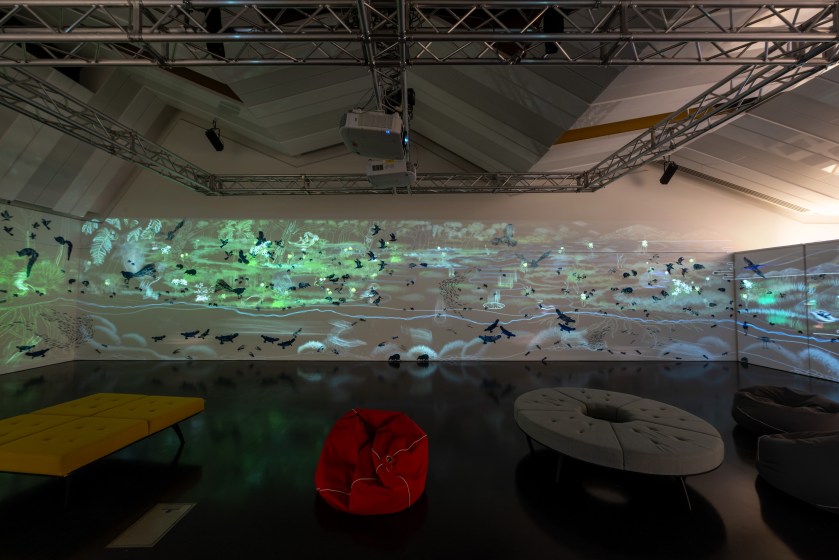
For the exhibition, I created a large-scale, two-minute animated projection spanning three walls of the main gallery. Combining original illustration, animation and sound, the work traces water as both an ecological system and a narrative thread: moving through landscape, carrying histories, connecting habitats and recording the effects of human intervention.
At the centre of the work is a simple idea:
Water carries evidence of everything it passes through.
The projection begins with an interconnected landscape before colonisation, moves through settlement, drainage, agriculture, urbanisation and ecological fragmentation, and concludes by considering restoration, coexistence and care. Rather than returning nostalgically to the past, the final section asks how fragmented habitats might reconnect and how waterways might be revitalised in the present and future.
Following water through Cardinia
The projection incorporates five key waterways — Cardinia Creek, Lower Gum Scrub Creek, Toomuc Creek, Deep Creek and the Bunyip River — which form the structural framework of the animation.
The imagery changes with the geography of the Shire, moving from Mountain Ash forests, tree ferns and heathy woodland, through riparian corridors, wetlands and grasslands, towards mangroves, saltmarsh and Western Port Bay.
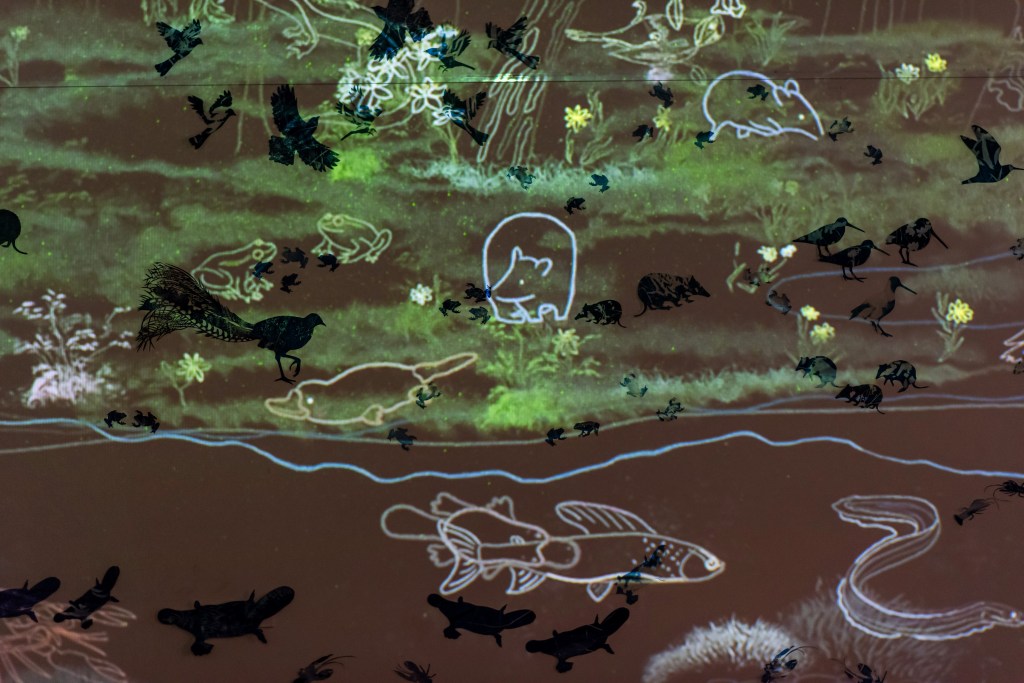
A continuous waterline runs across all three walls, connecting the mountain, transition and coastal environments. The projected landscape is also composed across three ecological zones — above the water, at the water’s surface and below the water — allowing birds, vegetation, waterways, fish, roots, groundwater and submerged habitats to exist simultaneously within the same landscape.
The spatial composition responds directly to the architecture of Cardinia Cultural Centre. The gallery roof slopes from a higher end to a lower end, echoing the broader geography of the Shire from the hills towards the Bay. The mountain landscape sits beneath the higher part of the roof, while the coastal environment occupies the lower end, allowing the architecture itself to reinforce the downhill movement of water.
Biodiversity at life scale
The projection is presented alongside Kate Gorringe-Smith’s printed biodiversity cutouts, created through cyanotype and monoprinting.
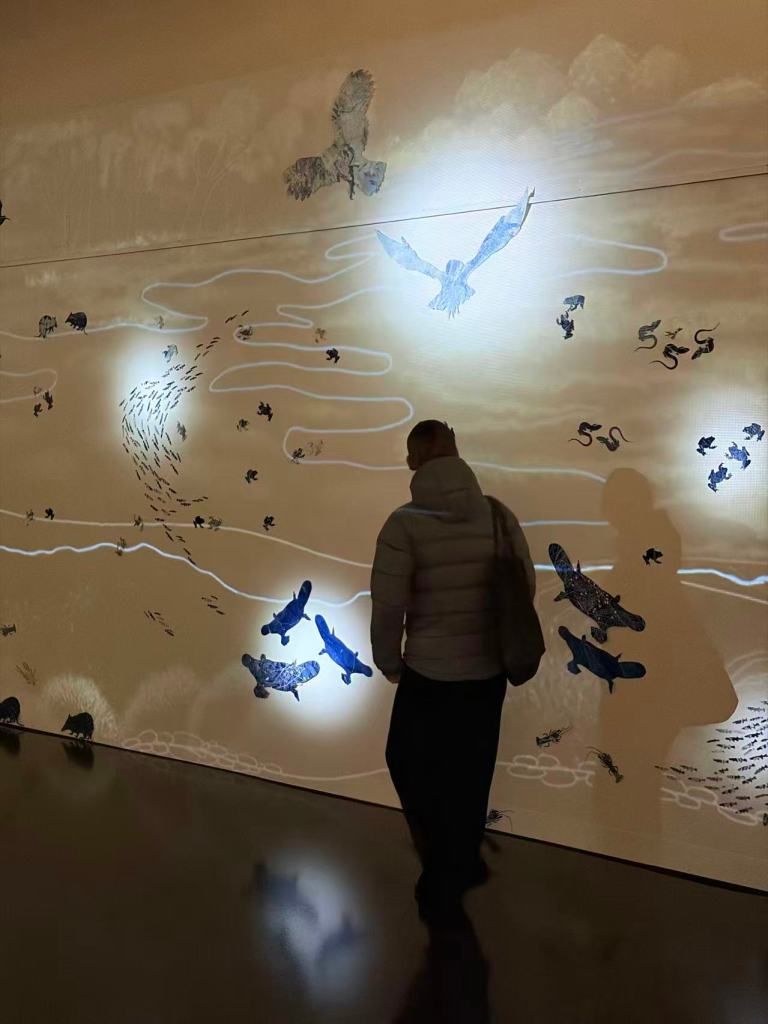
Working with Council’s conservation and arts teams, Kate focused on twelve animal species found across Cardinia Shire. Many of the silhouettes are life-size, grounding the animated landscape at a recognisable physical scale and giving the species a bodily presence within the gallery.
Kate’s printed animals and my moving landscape were developed in dialogue with one another. The projection surrounds, intersects and moves behind the cutouts, while the printed species anchor the animation in real space. Together, the two practices create the feeling of entering a large, moving ecological storybook.
Two deliberate pause moments within the projection bring attention back to Kate’s physical works. During these moments, the animated landscape recedes and shifting pools of light, shaped like water ripples, illuminate the animals.
The first pause presents the species as an ecological portrait — a celebration of biodiversity and living presence. The second follows environmental fragmentation, when the same animals appear more isolated and vulnerable. These moments of stillness shift the cutouts from celebration to reflection, before the projection moves towards reconnection and care.
Research, sound and environmental change
A major part of the project began through a site tour across Cardinia Shire with Council’s environment and conservation team. We visited waterways, wetlands, roads, urban areas and ecological corridors, discussing how water changes as it moves through different conditions.
One observation that stayed with me was how different habitats meet around the Princes Highway corridor. Although the highway can divide the landscape physically, waterways continue beneath and through it, allowing ecological systems on either side to remain connected.
The tour also made visible how water carries the effects of human activity. Rain falling onto roads and car parks can move quickly into drains and creeks, carrying litter and pollutants downstream. In the projection, rubbish, stormwater and environmental disturbance therefore travel across the walls rather than remaining where they first appear.
Sound is central to the storytelling. The soundscape moves between water, wind, vegetation, birds and frogs, before becoming increasingly mechanical and disruptive as infrastructure and environmental pressure enter the landscape. Some sounds and atmospheric impressions were recorded during the site tour.
Near the end of the projection, whispered voices introduce three figures drawn from Cardinia Shire Council’s Biodiversity Conservation Strategy 2019–29:
94 rare plants
63 threatened animals
33% endangered communities
The whispers sit within the soundscape almost as if the environment itself is asking to be noticed, listened to and cared for.
We are all connected
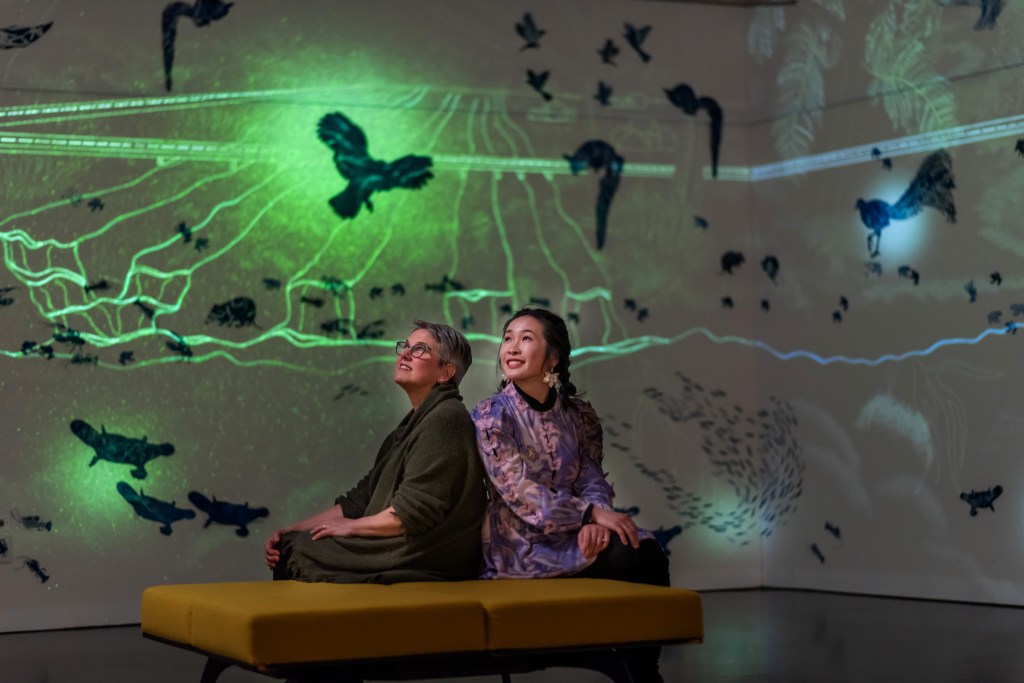
Catchment to Coast brings together ecological research, artistic interpretation, community participation and spatial storytelling.

